Sunday, July 8, 2018
From Nyamlell to Mogok
Father Michael D. Barton
Comboni Missionary
Mogok
Jonglei State
South Sudan
I left Nyamlell after eleven years and a bit more of wonderful work among the Dinka Malual and went home to the USA. The day I left Nyamlell was the day that Pope Benedict XVI announced that he would resign the papacy (February 2013) and I only heard about it when I reached Wau.
When I returned to the South Sudan in December 2013, the civil war had just broken out and I was looking at the only region of the South Sudan that I had not experienced — the Upper Nile Region, which was the area most affected by the civil war between the SPLA and SPLA-IO. Father Antonio Labracca was living in Ayod as a hermit and was open to my coming with him as one who would do missionary ministry in the area of the Nuer Gawar and Nuer Lou.
So, I was sent to Leer in Unity State to study the Nuer Language with a group of other Comboni Missionaries. We had one day of class. Then the civil war reached Leer and the looting soon began. The other missionaries fled the town too and I refused to join them so I saw the looting of the Catholic Mission of Leer. Two officials of an oil company working in that state helped me to find a boat on the White Nile to take me to Old Fangak, where the Combonis run another mission among the Nuer. I was welcomed by that community and stayed two months to study. For holy week 2014, I make the jump to my new assignment in Ayod and was there on Palm Sunday where they used a donkey in the procession and to welcome me into their community.
I was sent to Mogok to celebrate the rest of the Holy Week, where I saw a school building and a small Catholic community. On Easter Monday I went back to Ayod and as we got nearer I felt blisters on my feet after nine hours of walking. I also heard heavy gun fire coming from Ayod. I found Antonio well and we stayed in Ayod until Easter Friday when we were told to flee and that we did. One night it was deep in the bush and the next day it was even deeper and there we stayed for a month and a half with the hope that the government would leave Ayod and we could go back. That has yet to happen and we are in 2018.
That place was called Jony and we drank and washed in the same water all very brown and very much a village rural setting. No blackboard or books or even chalk. The catechists and youth had gone back to the town and brought out most of the clothes I had left there. I asked Antonio to allow me back to Mogok and I would start a school there and do pastoral work from there. So, I did.
With permission of the authorities of the place we started with a few textbooks and no chalk or food for me. Within two months Father Antonio had joined me, continuing his ministry as a prayerful hermit now both of us in Mogok. We had received chalk and food and the Mogok Christians built us two huts, a bigger one for Antonio and a smaller one for me — all for a new rain jacket.
I started the school with class 1 to class 5. No fees and not much interest from the local population and terrible absenteeism. To begin is tough. I found a few other teachers but to align them to my way of doing things was also difficult. Every year since has been easier and the pupils and parents have taken the school more seriously and the teacher more and more on board with what I want. At the end of 2017 we had the full primary school. The class eight has 5 candidates for the leaver certificate and they took the first three positions. The first position was one of our girls and second was one of our boys and third place was a tie between two boys and another girl all from our school. After starting from nothing in 2014, by 2018 we had something of value. Those two girls I sent to a senior secondary school in Rumbek run by the Irish Loreto Sisters. I have had good experiences with other girls in the past. Girls are terribly oppressed in Nuerland as in many other places and so I feel called to help them and let the boys figure other solutions with their families.
It was a real challenge to start and get going the catechumenate, and after four years it really is working only in Mogok but nowhere else in the parish. The vision I have is to create one parish with all the Nuer that I work with so we would be independent from Old Fangak. But so far it is only my vision and that of some of the West side of the parish and nobody else. Yet it continues in my head. I would like to see some permanent churches built and lots of instructions given and on-going growth going non-stop. We are just at the beginning and the Presbyterians are much more established.
The West part of the parish is part of the Sudd, a very large water containment, and are the Gawar, whereas the East is wet in the Wet Season (summer) and very dry in the dry (winter).
I move only on foot and have no car, or even bike or motorbike. I would be able to use a car if and when we go back to Ayod. Not now as it would be taken either by the government troops or the rebels among who we live. In the future . . .
In March 2017 many towns and villages were disrupted by government troops and looted by everyone. I had guns put to my head and Mogok was captured for just a few hours, but all my things were looted and carried off and up to June 2018, I had only one pair of long pants and three shirts. Now after a month home in Indianapolis I have more clothes than I had before the looting and I have bought nothing.
F


Photos from Mogok, South Sudan
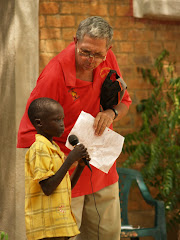
These are photos taken of the Mogok Christians and Comboni Missionaries Father Michael Barton and Father Antonio Labracca.


Wednesday, January 20, 2016
Message from Father Michael, Ascension Parish
Comboni Missonaries
Ascension Parish
January 17, 2016
Dear Family and friends,
I am in a place called Yuai where CRS is present and they let me use the computer and internet. So I can greet you after a long while of only prayerful daily contact and I do mean daily. In January I was in this area for the first time and visited all the three counties of the Nuer Lou that are under Ayod parish and had a lot of pastoral work masses, baptisms and church marriages and days and days of walking. In mid February, I went out of South Sudan to visit some other African countries only to clear my head from a tough year.
By mid March I was back here and visited most places again by myself with a small entourage and had Easter here and even visited some chapels that I had not been before. Then that same group led me back to Magok, which I had left on the 31 of Dec 2014. After two days of rest I was back in the bush with Gawar Nuer to visit new chapels there in Halt and Minime, which is one huge river surrounded with big swamps and water and flies and mosquitoes. We are just starting in that area and so I only Baptized five souls in those three weeks there. One old catechist volunteered to move there and so the future should get better. Two things that really impressed me were hundreds of dead cows in many villages everywhere dead cows. The other, was in one hut a huge python came out from under the bed and scared me to death, but when I yelled it went back under the bed and I could not get anyone else excited about it. No big deal for everyone else but for me a really big deal.
The rebel government gave me again permission to use the government school in Mogok and so my group led me back again to Mogok and we started up the new school year from May 10 or so to December 31, 2015. We had three terms with no breaks but weekends. The first and second terms were 11 weeks and the third term was 12 weeks and all with their exams. 2015 was so much better than 2014 with good attendance and good enrollment and no outside interference and a bit more support of the parents. The teachers were good and so were the children. I started a Sunday school for catechism and we had first communions and Baptisms on Comboni Day. After school I start to pump and fetch and carry our own water and wash my own clothes on some Saturdays. I learned to make pudding on big days using our neighbors' fire and firewood and they would help with the hot pans even when I would go to make popcorn.
On June 27 we celebrated with a big celebration of Father ANTONIO (1965 to 2015) and killed a big bull and Mass and a wedding and plays and games and speeches. Father feels a call to complete prayer and meditation as a special type of hermit and is loved by EVERYONE.
Rains were much less than the previous year but I still had lots of mud to cross going and coming from school. On one Saturday I was over making popcorn and Maria Nyapal was aiding me, when I heard her wonderful mother Roda yelling in a very nearby hut. And I asked Maria what it was. Oh, it is Roda. She was giving birth to her seventh child and there were lots of people in the compound and I was popping corn and the small children were all looking in the door and their fathers were calling them away but mystery was stronger than obedience. Martha the Aunt of Maria came out laughing and I asked was the baby like her or like me, and Martha said it was like her. You know that they named that girl Nyaabuna or daughter of the FATHER because of my presence at the time of birth. Father Antonio now always kids Roda that after the seventh time she still cries like a hyena. He had heard all about it from me.
Comboni Day was another big day and every day is full of seven teaching periods and correcting and grading and recording and then selling pens and exercise books and praying and reading and resting.
We have no desks and so the teachers have to bring their own chairs as do some of the pupils and the rest sit on the floor and they have to find their own textbooks since we have none in the school. Yet it so happened that before the war started a lorry broke down and was loaded with text books but are all in the hands of villagers. Yet two years we got through.
It was on the 17th that I started again to move. I did try to move in June but mud and water stopped me and I went to one place and cancelled the rest. Yet now it is dry and on the 15 of December our provincial came and lots of mail and many packets of magazines and so now I am up to date on the current events of a few months ago. Then on the Dec 8th we opened the Holy Year by making a door and going through it on our knees and singing mercy on your people, Lord. Then the evening we did it all again for and with the parish and from the 18th we are doing in the chapels. I was back for the exams and certificates and gave the certificates out on the 3rd of Jan and Lou people came to escort me to their area and this is what I am doing. But first all of the upper classes passed well and only in class ones and two were there failures and only some girls in class one did not make it and no one was pushed ahead everyone had to make on their own.
John Tap is the husband of Roda and father of the seven and has been with me in all these visits since I started in late December part time and now full time. He is such good company. As I walk I think of the old Toyota that I had in Nyamlell and I sing to myself to the music of a white Christmas. But the words are: I am dreaming of a white Toyota pickup with four wheel drive, and good tires that will get from here to there.
In one chapel, and I have blessed six new chapels all built by the local Christians, and at St. Teresa there were very little girls as alleluia dancers and one would dance her heart out and then look at me with pleading eyes and she was thinking to herself, please do not eat me . . . Little Flower forever.
Today we had confessions and the mercy Mass with government people here up to the end and then testing, and so tomorrow we have in the same chapel a Mass, a wedding and 17 baptisms and then on Tuesday a ten hour walk to the next place.
Blessing and peace,
Michael Barton
Thursday, March 6, 2014
Escape from looting in Leer
From an email sent by Father Michael Barton on Feb. 28:
I shall try to write something at the end of most months. Last January 31st I was running from the looting of Leer and then was helped to find a boat on the Nile to get to Old Fanjok Mission dedicated to the Holy Trinity where there are three Comboni priest, one Italian, another an Uganda and a German whose mother is a Korean and here they have decided to do all the work of cleaning and cooking and wasking of their clothes. So they walk and use canoes to get to their many chapels. No cars or bikes here. I am mostly given over to the study of Nuer and at this age will do what I can do.. I hope to get to Ayod by early April and in this month I will study and also teach in the catechist course in the month of March.
Michael
In the midst of South Sudan's civil war
SHARING IN THE GRIEFS, ANXIETIES AND HOPES OF THE PEOPLE
AN ACCOUNT OF WAR CONFLICTS IN LEER MISSION
“If anyone wants to be a follower of mine, let him renounce himself
and take up his cross and follow me.” Mark 8:34
Initial remarks – The narrative that follows is not meant to be any kind of official report of the members of the Comboni Family who work in Leer mission on what happened to them over the past three weeks. It is, however, intended to be a personal sharing of what happened in Leer mission following the outbreak of violence that started in Juba 15 December 2013 with particular emphasis on the experience the missionaries in Leer went through and the outcome of it. It mostly reflects the personal experience and views of the author without neglecting the role of the two groups of missionaries involved. For security reasons, the name of some places and of some people will be omitted.
Leer mission and the missionaries – Leer mission (Saint Joseph the Worker Parish) is comprised of Leer, Mayiendit, Koch and Panyijiar counties, in the southern of Unity Sate. It is under the Diocese of Malakal and has been entrusted to the pastoral care of the Comboni Missionaries. The whole area is inhabited by the Nuer people and is a land rich in oil and other natural resources. We are currently five Comboni Missionaries working in Leer: Fr. Francesco Chemello (Italy), Fr. Raimundo Rocha (Brazil), Fr. Yacob Solomon (Ethiopia), Br. Nicola Bortoli (Italy) and Br. Peter Fafa (Togo). In January joined the mission in Leer the scholastic (seminarian) Ketema Dagne (Ethiopia) and Fr. Michael Barton (USA). They went there to learn the Nuer language. The Comboni Missionaries Sisters working in Leer are Sr. Agata Catone (Italy), Sr. Carmirta Júlia (Ecuador), Sr. Laura Perina (Italy) and Sr. Lorena Morales (Costa Rica).
Our guests - On Friday 10 January we welcomed Fr. Stephen and Fr. Ernest Adwok who fled Mayon and Bentiu. We accommodated them together with a married couple. Fr. Joseph Makuey, also a diocesan priest working in Rubknona, went to stay in Koch. A lady from Juba, with her 17 months old daughter, who had been trading in Bentiu, asked for help and was also accommodated in our mission house in Leer on 24 January. She walked all the way from Bentiu and spent two weeks in the bush before reaching Leer. She is a widow and belongs to another tribe and knew no one in Leer.
The conflicts – When violence broke out in Juba on 15 December no one could expect it would spread so rapidly across the country. While getting to know what was going on in Juba, we in Leer went on with our daily routine, but with concerns. Soon violence broke out also in Bentiu, Unity State. That raised even more concerns because Bentiu is located 130 km away from Leer. At this point the army had split and the opposition was in control of Bentiu. Fighting was occurring and people started fleeing Bentiu towards Leer. An estimated 30 thousand people had fled to Leer. Concerns were even higher, and yet, we hoped violence could not reach Leer.
The conflicts and change of environment in Leer – Since conflicts began in Bentiu the atmosphere in Leer changed. There were days of high tensions alternated with days of relative calm, but there has never been a real fighting till the day we left. Leer market was the only one supplying food for the rest of the region. The movement of soldiers in Leer increased when government troops advanced and took control of Bentiu. Leer MSF hospital was operating normally. We, instead, cancelled most of our pastoral programmes and remained in Leer monitoring the situation and updating both the Comboni Province and UNIMISS on security matters. Information came that the government troops were advancing towards Leer. On Monday 13 January gunshots were heard all through the night. At 4.00 am some catechists came to inform that they were fleeing Leer to the villages for they heard troops would have reached Koch (Tharjath, 55 km from Leer). We held a community meeting at 5.00 am and decided to remain in Leer and to run to the bush only if we would be under big danger. The gunshots were a kind of warning for the population to leave the town. We learned later that it was also to scare people and loot the market and residences as civilians were moving out. In fact, the market was looted. MSF team of expats evacuated. Tensions and fears increased. The possibility for the war to come to Leer now was real. Leer had been very crowded the days before. Now became almost a deserted town. Up to this point the army in opposition (rebels) was in control of Leer. There was no fight, but people would not return to their houses and there was no harassment towards the missionaries. On Sunday 19 January we prayed in four different locations within and around Leer. Fr. Francis Chemello had gone to Mayiendit and then to Panyijiar since early January. Again on Sunday 26 January we prayed in six different locations. This time we saw that the situation was getting worse. Food was getting finished. There was lack of clean water, sanitation and medicine. Later on that week two Comboni Sisters, Laura and Lorena, decided to move out to stay where people were. They went to a community 6 km away from Leer. At this point the government troops had reached Mirmir area (21 km from Leer). Fighting in Mirmir went on for some days. We could hear the sound of heavy artillery from far. Tensions were mounting, fears were increasing. The remaining civilians fled Leer. The possibility to evacuate the mission at this point was pretty difficult, but still possible, if any of us wished to. However, we decided to remain. On Wednesday 29 January five different groups of police/soldiers attempted to take our cars. Some were drunk. Leer MSF hospital and other compounds belonging to NGOs had already been looted. The mission compound could be the next. I reported the provincial that the situation became a lot more tense and worsened and confessed that I was afraid. Both phone networks were down. Our internet was the only means of communication. That night we received information from a MSF coordinator saying that in the front line of the troops there were the Darfurians rebels who allied to the government troops. They would not respect the church as the army soldiers might do. Meanwhile, I received a lot of appeals from family members, friends and other missionaries to consider leaving the mission, but that was too late and we had made up our minds as to stay.
The fleeing of the missionaries to the bush – On 30 January, after the Morning Prayer, we met and decided to leave the church and seek refuge in the bush where people had gone. Fr. Stephen had already left with the married couple we hosted. We decided to go to a location called Gandor hoping to find Fr. Stephen there for he was holding a Thuraya (satellite phone). We packed what we could take, loaded the cars with food and other items and left at 9.45 am with three vehicles. In my bag I made sure I put the Holy Eucharist and what was necessary for prayers, a statue of Our Lady Aparecida of Brazil, my old computer, documents and a few clothes. Before leaving, we informed the Comboni Missionaries and Sisters about our decision and where we were going to. We did not have many options. Leer is isolated. We would be corned anywhere we went. So we went off. Now we had become also displaced persons, just like our people. Fr. Michael Barton decided to remain in the mission house. As soon as we left, people, both civilians and military, started looting our mission houses and the mission schools (VTC). As we moved out, we came across Sr. Lorena and a lady who were heading for Leer to see how we were. We took them back to the place where they were before and there decided to move further up to a safer place together with some catechists. Gandhor would be still close to Leer. We went instead to Beer (28 km from Leer). One of our cars got stuck in the sand. That delayed the journey. Our group increased because some catechists and a couple from Yambio joined us. Excluding the Nuer people among us, we were ten missionaries, one diocesan priest, a lady with her child and the married couple from Yambio. On the way to Beer we met Fr. Stephen. We informed him about our destination and he was planning to join us later on. We finally arrived in Beer chapel at 1.45 pm, had a tea with some biscuits and decided to rest.
The most dramatic moment – We were welcomed in Beer chapel by local Christians and settled there thinking that we were safe. We assumed the government troops would reach Leer soon, but through the main road. Now we were 28 km away from Leer, and so, safe. What happened was that Darfurian rebels and SPLA soldiers attacked us just one hour after our arrival in Beer. They came from Mirmir through the bush and were divided into three groups. Those people do not knock on your door, they arrived shooting at us. When we heard the gunshots and the sound of bullets flying over our heads, we took what we could and ran into the bush. I ran with three bags. Fr. Ernest ran with me and also the lady with her child. People ran in different directions. The gunfire was intense. I fell down three times. At some point I had given up, I could run no more and was ready if they came to shoot me. Fr. Ernest was encouraging me. An old man, whose marriage I had assisted at, appeared from nowhere. He put a bed sheet on the ground for me to rest and took my heaviest bag. Another bag was given to one of the sisters. We had more gunfire and more running. The lady with the baby was left behind. When I and Fr. Ernest got completely exhausted, we threw ourselves on the ground in the middle of the dry grass under some palm trees and remained there unmoved for more than one hour. We were not able to figure out what had happened to the rest of the group. We thought some could be dead. The gunfire went on from 3.00 to 6.00 pm. Suddenly, two cattle keepers walked by and saw us lying on the ground. We indentified ourselves. They moved on and came back later with Rebeka, a lady of the church, who took us to where the rest of the groups was. We were glad to see they were alive too. We miraculously escaped death. No doubt God protected us all along. The lady with the baby and a few others were still missing. We had information they had run very far and would be alive. We spent the night in a house nearby in terrible fear.
Reaching another location and reality – Early in the morning we moved to a far off location in the swamps. There we would be safer. We were welcomed by the owner of the house. There we set home and would sleep on the ground for the next twenty days. Little by little the group was getting together once again. We felt so relieved and grateful to God. Now we learned that one Nuer person was shot dead, two of our cars were taken and another car was set on fire by the Darfurians and government soldiers while civilians and other military rebels were looting the mission. We had lost almost everything. Most of us remained with the clothes we were wearing. We shared our clothes and other items with those who had little. I was able to save my documents, old computer, Holy Communion and a few clothes. And so was Fr. Jacob. Some money was also saved with which we would by our food. The new location was a real swampy area and very far. There are hippos and crocodiles. It was cold at night and very wind during the day. It soon became crowded. Many other displaced families joined us. One day I counted over 140 mosquito nets tents each sheltering tree or more people. We were nearly 500 people. Food was getting scarce. Local Christians were collecting food to feed us. We got four goats and a bull which we shared among all. The same we did with dry fish. Hunt was also part of the menu (buffalo, hippo and crocodile). We drank from the same swampy water we bathed with, we just boiled it. I had some medicine which I was sharing with the sick. Most children were affected with cough and malnutrition. Some sick with malaria. It is the burning season and to make things worse, fire was put in the dry grass. On 10 February a big fire came towards our camp. We run for a short distance till the fire was extinguished. Now most firewood was burnt. That bush was also our ‘toilet’.
Solidarity in difficult times – We were in the same situation as all the people. We had very little to rely on, but we all had God. In fact, every evening at 5.00 pm we celebrated mass having an improvised small altar and people seating on the ground. We were sure that many would be praying for us around the world. We never lost hope that we would come out. The biggest challenge was communication. The catechists plus two of us walked three hours till they found a satellite phone with which they were able to communicate with Juba. We felt much relaxed because people in Juba and our families and friends would know that we were alive and well. We also came to know that Fr. Francis Chemello was still in Panyinjiar and Fr. Michael Barton had reached Old Fangak mission and Fr. Stephen was taken to Bentiu. We hoped they could rescue us, but UNIMISS does not do rescue operations since a helicopter was shot down last year. We intensified our prayers. We got all possible support from some local Christians. If, on the one hand, the very people we have been trying to help and serve, including some Christians, looted our properties and made us feel sad, on the other hand, the solidarity of some Christians made us proud of them. We ate little, but never lacked food. They shared the little they had with us. The regional catechist of Leer walked two days looking for us. When he found us he shared with us the money of a goat he had sold out to help his handicapped son. And there were many signs like that. We were worried and anxious also because the longer we would remain there the more we would be a burden on people. However, the only way to evacuate us was to go to Leer airstrip. So, I wrote a letter to the commissioner to enquire if it was safe to move to Leer and if we could stay in our houses. At the same time the commissioner was searching for us unsuccessfully. When we got a reply that we could walk to the main road so that he could pick us up by car, we decided to move back to Leer next morning at dawn. We left the place at 6.00 am. It was very cool and we were helped by the moon light. We walked for four hours. Sr. Agata, a 67 years old nun, was really brave. Some Christians walked us up to Mirmir. We walked in fear since some armed youth were threatening us because they thought our presence there would attract the soldiers. When we reached Mirmir we learned that the cars went to another location to collect us. We spent two days in Mirmir. The soldiers were friendly and supportive. No harassment or animosity. They gave us food and mosquito nets and mattresses to spend the night. Transport was delayed. Later we learned that the reason was an ambush on them. So, they had to chase away those ambushing them and clear the way between Leer and Mirmir. Finally, transport arrived and we were taken to Leer in great fear of a possible ambush. We reached Leer on Sunday evening 16 February and went to stay in our houses. It was heartbreaking to see our mission houses all looted. Only the buildings were standing with doors, gates and bathrooms all damaged. Everything else had been taken by both civilians and soldiers. The church was not touched, but all the buildings in local material were burnt down. It is very sad indeed to see huge investments and years of hard work all destroyed. However, our lives and our faith were not taken. The possibility to go out to Juba was more real and that night we celebrated a thanksgiving mass for having reached this far.
Coming to Juba – On 16 February we were informed that there would be a flight for next day, but there would be only for seats available. We met and discerned who could be the first four passengers to leave. We let those who were sick to travel first. These were Sr. Agata, the lady with her sick daughter, an old lady and Sr. Carmita. They flew out on a Caravan Cesna by UNIMISS/WFP. Nine of us remained behind for another flight which would come two days later. This allowed us time to clean the mess in both houses and to recover some books. We were given some more food, which was added to some food sent from Juba by plane. Finally, we left Leer on 20 February at 2.30 pm on a Mi-8 UNIMISS/WFP helicopter. After a lading in Rumbek for refuelling, we reached Juba at 5.45 pm all exhausted but happy. We were warmly welcomed by both MCCJ and CMS communities of Juba. We met again Fr. Francis Chemello. I was able to talk to my mother, a sister of mine and a nephew by phone. While in exultation we were also mindful of our people who remained behind in the bush in fear and lacking food, clean water, shelter and medicine.
Decision to stay in Leer – In Leer itself, up to the day we left it, there was no fighting. When Darfurian rebels and government troops arrived there the town was desert and the rebels had gone into the bush. Yet, they burnt all the grass houses. There are reports that some people were killed and women raped. A woman would have been raped by seven men. Only brick and zinc buildings remain standing. The entire Leer population and some thousands from Bentiu are still in the bush right now. Only some women go to Leer looking for food. Men fear to go. Also, some Bentiu residents go to Leer to be taken back to Bentiu. Government forces are in control. While all this took place, many people wondered why we stayed in Leer when we knew it was extremely dangerous to do so. On this I share my opinion, which may coincide with that of my colleague missionaries. Actually, I was afraid to stay, honestly, and was the only one who expressly told the provincial by email that would leave Leer, should I see my life at risk and if that was safe enough for a plane to land. Some family members, other missionaries and friends were encouraging me to leave and come back later with my colleagues. The question I kept asking myself was when my life would be at risk and when would it be the right time to leave and how. It was not an easy discernment. What weighted more in my decision to stay was the fact that, if I left to Juba, leaving all my colleagues behind to suffer alone and even being killed, I would never forgive myself for such an attitude. My religious community is my family. I would not abandon my family. I would rather face all hardships, even death, than to remain alive and safe in pain and suffering. This was one of my feelings. As for the two religious communities, what made us to stay basically was the hope that government troops would not reach Leer and there would be no fighting in town. And if they came at all, we hoped that they would respect us as church and would not loot the mission properties. We also hoped that the cease-fire agreement would be implemented and conflicts would end soon, instead it was violated and violence was escalating. Besides, we thought that our presence around Leer would somehow inhibited atrocities and harms towards innocent civilians. We want also to give hope to our people and stand by their side at this war. We had been there for them, we would stay with them. However, we were very aware of the risks. We were not naïve, did not underestimate the situation and did not want to put any one in trouble either. It was our missionary option. We only considered running into the bush, if that was necessary, but to remain. In fact, that is what happened. All along we tried to make decisions together. Both the Provincial Superior of the Comboni Missionaries and the Provincial Superior of the Comboni Sisters respected our decisions and supported us all through. No decision was imposed on us. It was our free and conscious choice and we have never been neglected.
Final remarks – We are now in Juba and for the time being we will remain around recovering from stress and tiredness. Juba is safe. We shall monitor the situation in Leer and in the rest of the country. We pray and hope that this war may come to an end soon and peace may be re-established. I am very grateful to the God of life and love for all God has done for me, for the sisters, for my colleagues and the people who helped us. I want to thank each and every one of you who has been praying hard for our safety, life and rescue. God listened to yours and our prayers. I believe in miracles. They happened. Now we are fine, but our people are suffering a lot in the bush and swamps. Please pray for them and do what you can to help them. Thank you to Br. Peppo and to Sr. Anna in Juba who mobilized ‘half of the world’ to take us to Juba. Thanks a lot also to the provincials Sr. Giovanna and Fr. Daniele Moschetti for the trust and all support. Thanks to Fr. Moschetti and to the Comboni Missionaries in Brazil who showed their solidarity and kept my family informed. Many thanks to UNIMISS/WFP for coordinating the flights. Also, my immense gratitude to all Christians and other people who helped us in Leer in many different ways. I am still recomposing myself and trying to make sense of a lot of things, but I am happy and proud of being a missionary member of the Comboni Family. May St. Daniel Comboni and St. Josephine Bakhita intercede for us and for the peoples of South Sudan. Remain blessed and in peace.
In Christ,
Fr. Raimundo Rocha, mccj
Leer Parish Priest
Juba, 21 February 2014.
1
Friday, January 3, 2014
Waiting for the next step in the journey
Jan. 3, 2014
A brief note from Father Michael Barton, who is now back in South Sudan:
I passed though London and Nairobi and got here to Juba on December 24th and had Christmas Mass here in the South Sudan. On the Saturday after Christmas I was able to go and say Mass on the grave Of Aloyisius Lado, a catechist who was a leper yet worked with me and other priests in the Luri Ro Kwe Leper Colony outside of Juba. The next day I went back on the feast of the Holy Family to that same chapel. I had it all in Bari and even though it has been many years I remembered enough to say the masses and preach.
Here in Juba I am waiting for a flight for Ayod in Jonglei State or to Leer in Unity State, so many days I walk to the White Nile and do I ever love that river.
Next week early I should be able to get to one of those two sites and will begin to study Nuer.
Happy Epiphany and then Orthodox Christmas!
Michael Barton
Heading back to South Sudan
December 17th, 2013
Dear friends,
Today I end my long home leave and head back to South Sudan to take up work again in a new mission in a new region with a new people and a new culture and language. When I went to the South Sudan for the first time, in 1978, there were three regions: Equatoria where I worked for nine years, and Bahr el Ghazal where I labored for twenty years in two different missions. The third region was then called Upper Nile, where I never set foot in. Now those three regions have been divided into ten states in a federal system like the one here in the United States.
As of now the plan is that I will go into that territory where I had never been, that is, Upper Nile to Unity State to a small town called Leer where the Comboni Missionaries run a parish dedicated to Saint Joseph the Worker and a technical school. Leer is among the Nuer, which is the second largest Ethnic group in South Sudan. At Leer I am to study the language and culture of the Nuer. I am to stay there for three months in Leer trying to learn and in order to learn I shall have to study like mad. I understand that this course will be lead by a Presbyterian Minister.
After the course I am to go to work in a Catholic mission called Ayot in Jonglei State and is also among the Nuer. Jonglei is the least peaceful and the largest state of the Republic of the South Sudan. There have been many tribal and clan conflicts all over the state that is the home of many diverse tribes and each tribe with many divergent clans, very often living together with many differences, which often lead to conflicts. On top of this there is a rebel movement in the state that wants to overthrown the federal government in Juba. All of this cries out all the more for the message of the Gospel.
So the future like the past could have some bumps in it and the Word of God just told us to fear not because the Lord is with us.
While at home I have been able to visit many wonderful place and see many historical and touristic sites and I am so grateful to God and to my sister and brother-in-law, who have housed me this time around and included me in so much of their travel. I also traveled a lot to make mission appeals to support the Comboni Missionaries here in the USA and in the far away mission lands. I am also so grateful to you who have been so generous to me and always welcoming and friendly. Thank you so very much!
As the Nativity of the Lord is so near I want to wish you a very Merry Christmas celebration and a wonderful New Year in 2014. Peace and prosperity to one and all.
Sincerely grateful to you I remain your friend and prayer buddy.
Yours in the joy and courage of the new born Savior and Missionary,
Father Michael D. Barton, MCCJ.
Comboni Missionaries-South Sudan
P.O. Box 21102. Nairobi, Kenya. 00505 (mdbnyamllel@aol.com)
Subscribe to:
Posts (Atom)